Bottle rinsing
Neck handling, inversion, rinse-water and drainage must match the approved bottle.
- Bottle-format compatibility
- Gripper and guide scope
- Drainage and inspection points
Equipment decision center / PET still water
Rinse, fill and cap still-water bottles in one automatic monoblock. Compare the machine by bottle and cap, required bottles per hour, installation interfaces and price scope—with project support from Allot Tech.
Start with bottle volume, bottle drawing, cap type, target BPH, voltage and destination. 500 ml catalog speed is a rating basis, not a promise for every bottle.
Selection Tools
Choose the stage that matches your current question. Each route leads to the evidence required before a reliable quotation.
Catalog machine photography
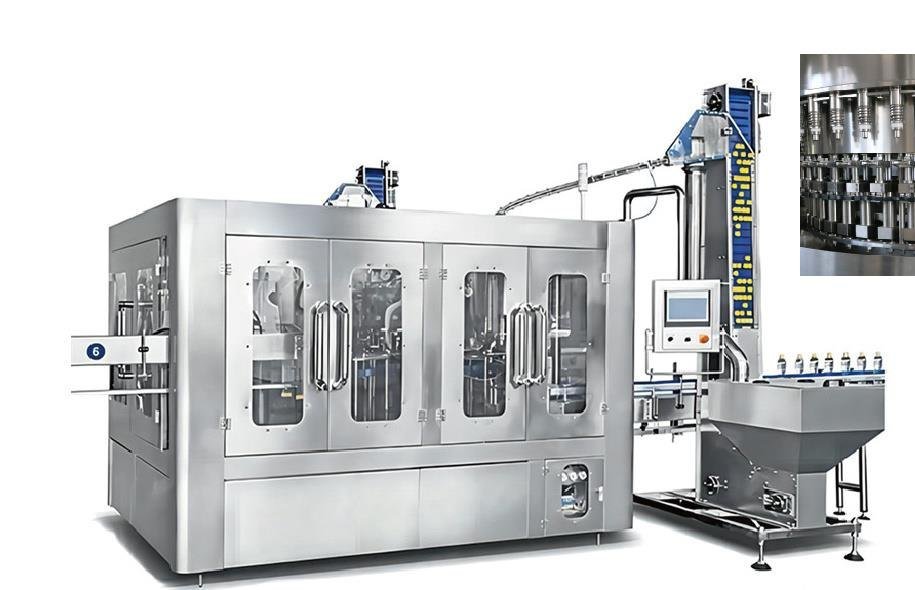
These are equipment images extracted from the supplied Allot Tech catalog. They show reference equipment families; the final project configuration remains proposal-specific.
Catalog monoblock reference for small-format PET still water.
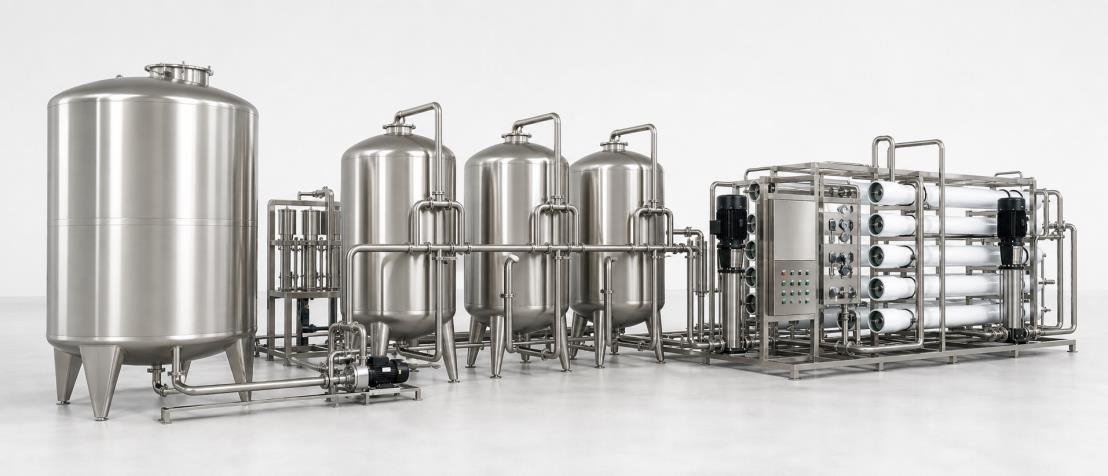
Treatment scope is confirmed from the actual raw-water report and product requirement.
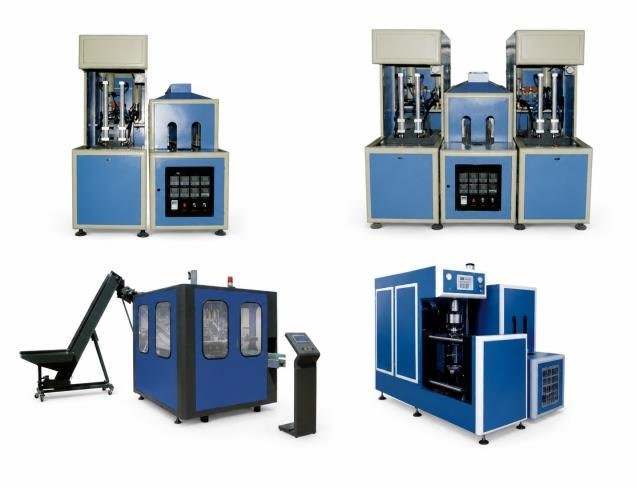
Blowing, empty-bottle handling and filler interfaces must share one approved bottle definition.
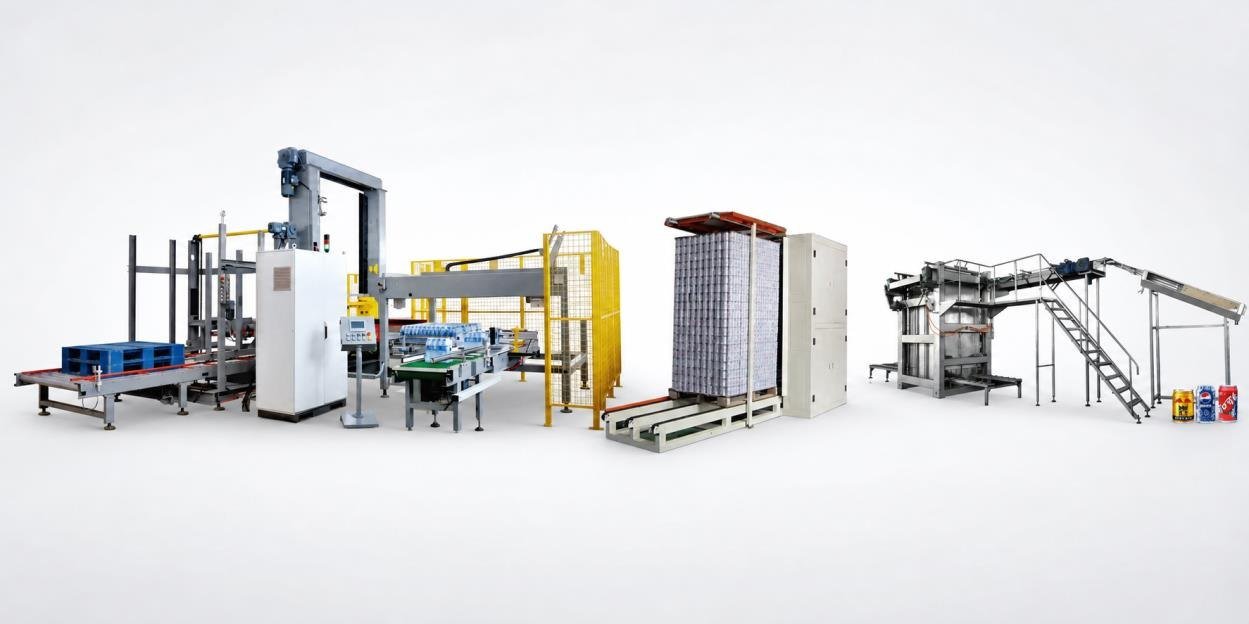
Labeling, coding, conveying and packing are separate downstream scope decisions.
Inside the machine / click a stage
Follow the bottle from empty-bottle entry to capped-bottle discharge. Each stage has a buyer input, risk, FAT check and interface.
Presents empty PET bottles at the agreed neck-handling height and direction.
Bottle neck drawing, conveyor elevation and upstream speed.
Unstable spacing, damaged necks or mismatched transfer height.
Test starvation, restart and stable transfer with the approved bottle.
Blow molder or empty-bottle supply to monoblock handover.
Controls the bottle between the infeed and rinsing gripper.
Bottle geometry, support ring and planned formats.
Jams or drops when the transfer profile is not approved.
Inspect repeated transfers at the agreed reference speed.
Mechanical centerline and synchronized machine timing.
Grips, inverts, rinses and drains the empty bottle.
Rinse-water boundary, bottle drawing and sample.
Neck marks, poor drainage or unstable inversion.
Inspect handling marks, drainage and bottle stability.
Rinse-water supply, drain and transfer to filling.
Fills the approved bottle with still product water under the confirmed principle.
Product-water conditions, bottle and output basis.
Inconsistent level or speed assumptions from an undefined supply.
Record output, fill level, leakage and operating condition.
Treated-water tank, pump, piping and control boundary.
Elevates, sorts and conveys approved caps to the placement point.
Cap drawing, sample, loading method and rate.
Jams, reversed caps or inadequate buffer.
Run the approved cap and test starvation/jam logic.
Operator or bulk cap supply to capping zone.
Places and tightens the approved closure on the filled bottle.
Neck finish, cap specification and acceptance check.
Missing, tilted, leaking or damaged closures.
Inspect placement, tightening result and leakage.
Cap path, filled-bottle transfer and outfeed inspection.
Transfers the capped bottle to downstream conveying.
Direction, elevation, downstream speed and accumulation.
Back pressure, tipping or blocked discharge.
Test blockage, restart and stable filled-bottle transfer.
Monoblock discharge to labeling and packing route.
Functional illustration - final machine design depends on the approved configuration.
Three synchronized zones
Neck handling, inversion, rinse-water and drainage must match the approved bottle.
Normal-pressure filling requires a defined product-water supply and a format-specific output basis.
Cap sorting, conveying, placement and closing depend on the actual cap and neck finish.
Tool 02 / input completeness
This tool checks the information package. It does not approve compatibility.
Tool 01 / required BPH
Required BPH = daily saleable bottles ÷ net operating hours ÷ planning efficiency × growth reserve.
Catalog model selector
Nine catalog model numbers beginning with XGF are published on a 500 ml basis. The letters are retained only as part of those model numbers; the catalog gives no expanded meaning. Requirements below 6,000 BPH need a separately confirmed compact platform.
| Reference model | Output | Machine size |
|---|---|---|
| XGF14-12-5 | 6,000 BPH | L2360 × W1770 × H2700 mm |
| XGF16-16-5 | 8,000 BPH | L2760 × W2060 × H2700 mm |
| XGF24-24-8 | 13,000 BPH | L2800 × W2230 × H2700 mm |
| XGF32-32-8 | 16,000 BPH | L4215 × W2960 × H2700 mm |
| XGF40-40-12 | 18,000 BPH | L4360 × W3300 × H2700 mm |
| XGF50-50-15 | 24,000 BPH | L5900 × W4123 × H2700 mm |
| XGF60-60-15 | 30,000 BPH | L5770 × W5288 × H2700 mm |
| XGF72-72-18 | 36,000 BPH | L6540 × W4900 × H2700 mm |
| XGF80-80-18 | 42,000 BPH | L7800 × W6380 × H2700 mm |
Published container basis: 500 ml; bottle height 170-320 mm; bottle diameter 50-115 mm; published container range 500-2000 ml.
Qualified search questions / machine decisions
Use one intent owner for each capacity, bottle, utility, cost, schedule or manufacturer question—then move to the next purchasing decision.
Plan a 5,000 BPH bottled water filling machine around real saleable output, 500 ml bottle data, efficiency reserve, line scope, utilities and FAT evidence.
Compare the capacity reserve around a 10,000 BPH bottled water filling requirement using bottle format, efficiency, XGF reference bands and downstream scope.
Review a 12,000 BPH bottled water filling target against the 13,000 BPH XGF reference, container format, efficiency reserve and acceptance test.
Plan a 20,000 BPH bottled water filling machine using the 18,000 and 24,000 BPH XGF bands, bottle data, line balance, utilities and FAT scope.
Select a 500 ml PET bottled water filling machine by neck finish, bottle stability, cap, required BPH, change parts, interfaces and FAT evidence.
Separate filling-machine rated power from complete-line electricity demand and prepare a utility schedule for conveyors, treatment, blowing and packing.
Understand filling-machine installation cost drivers including unloading, foundations, utilities, interfaces, travel, commissioning materials and training.
Plan filling-machine delivery time across bottle confirmation, drawings, production, FAT, packing, export shipping, installation and commissioning.
Follow PET bottles through rinsing, normal-pressure water filling and screw capping, including neck transfer, product-water and conveyor interfaces.
Evaluate a China bottled water filling machine manufacturer by bottle review, technical scope, factory evidence, FAT, documentation and export support.
Machine scope options
For a plant with treated water, empty-bottle supply, air conveyor, downstream conveyors, labeling and packing already defined.
Request machine-only quoteMain monoblock plus agreed air-conveyor handover, cap feeding, basic bottle outfeed and required transfer sections.
Define my interfacesMay add water treatment, bottle blowing, labeling, coding, packing and line conveying under a separate line-level scope.
Complete bottled-water filling line planningWhy quotes look different
Compare stations, bottle handling, cap feeding, conveyors, tank, piping, controls, change parts, spares, FAT, installation and freight.
Tool 03 / quotation scope
Mark every row included, excluded or not stated. The total is meaningful only after the scope is comparable.
| Scope row | |||
|---|---|---|---|
| Main machine | |||
| Air conveyor | |||
| Cap elevator | |||
| Cap sorter | |||
| Bottle outfeed | |||
| Product-water tank | |||
| Pumps and piping | |||
| Change parts | |||
| Spare parts | |||
| FAT | |||
| Installation | |||
| Shipping | |||
| Documentation |
FAT acceptance preview
A useful FAT records the approved samples, run method, output, quality observations, alarm logic, parts and documents.
Get an FAT ChecklistHow Allot Tech works
This specialized bottled-water filling machine website is operated by Allot Tech (Suzhou) Co., Ltd..
Frequently asked decisions
No automatic equivalence should be assumed. The published XGF output is based on a 500 ml reference container. Larger-bottle output requires confirmation against the bottle drawing, cap, operating conditions and test method.
It may run several approved formats, but each bottle and cap must be reviewed. The proposal should identify adjustments, change parts, cap-system changes and the formats included in FAT.
Only when those items are stated in the quotation. Compare the main monoblock, air conveyor, cap elevator, cap sorter, bottle outfeed, product-water tank, pumps, piping and services as separate scope rows.
Send bottle volume and dimensions, neck finish, cap details, target BPH, daily production plan, existing equipment, voltage, line direction, destination and available bottle or cap drawings and samples.
No. This site focuses on small-format PET bottled still-water filling monoblocks. Returnable 18.9 L or 20 L barrel projects require a separate QGF-type equipment review.
Final inquiry / machine-specific
Use the quick form now or open the full technical configuration when drawings, utilities and interfaces are available.
Mr Kcal
Allot Tech (Suzhou) Co., Ltd.